Did Eddie Hearn make the right call for boxing’s future?
Article by Joseph Herron of War A Week Boxing
Fury vs. Joshua, Netflix, Turki Alalshikh and the fight over where boxing goes next
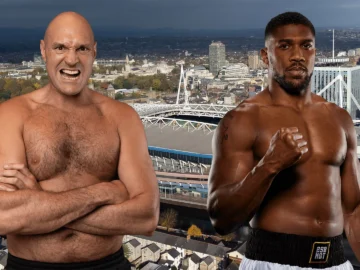
There is a much bigger story developing around Tyson Fury vs. Anthony Joshua than simply where the biggest heavyweight fight in Britain will take place.
The fight is officially scheduled for December 11 at Principality Stadium in Cardiff, Wales, and will be streamed globally by Netflix. But the road to Cardiff has exposed a much deeper argument about boxing itself: Who should control the sport’s biggest events? How much should fighters and promoters be willing to sacrifice for the home fans? How dependent has boxing become on Turki Alalshikh’s financial power? And perhaps most importantly, what happens to boxing if that financial engine eventually becomes smaller or disappears?
At the center of that debate stands Eddie Hearn.
Hearn and Anthony Joshua insisted that the Fury-Joshua showdown belonged in the United Kingdom. Earlier discussions had centered on Madison Square Garden in New York, a location that offered significant commercial advantages because of the American television market and the time-zone economics surrounding a Netflix global event.
Fury himself has publicly expressed frustration over the promotional dispute, while Hearn maintained that Joshua’s contractual position required the fight to be staged in Britain. Reuters reported that the venue dispute became serious enough that Fury questioned whether the fight would happen at all.
Eventually, Cardiff won…and according to Turki Alalshikh, it came at an enormous financial price.
THE $70 MILLION QUESTION
Alalshikh has said that moving the fight from New York to the United Kingdom cost an estimated $70 million in potential revenue. The figure is his own estimate, not an independently audited number, but it puts the central business question into stark terms: How much is a British homecoming worth when the alternative could generate substantially more revenue?
The source material supplied for this article records Alalshikh saying that his decision to accept the British venue represented a major financial sacrifice and that the American audience remained an important consideration in determining the event’s timing.
For Hearn and Joshua, however, this was never simply about maximizing the immediate payday.
Anthony Joshua is British. Tyson Fury is British. The fight has been talked about for years as a defining all-British heavyweight event. British fans had watched the rivalry grow from a distance while repeatedly hearing that the fight could end up anywhere in the world.
Hearn’s argument was essentially that this one belonged at home.
There is a cultural argument there that cannot simply be dismissed as promoter politics.
But boxing is also a business.
And that is where the story becomes considerably more complicated.
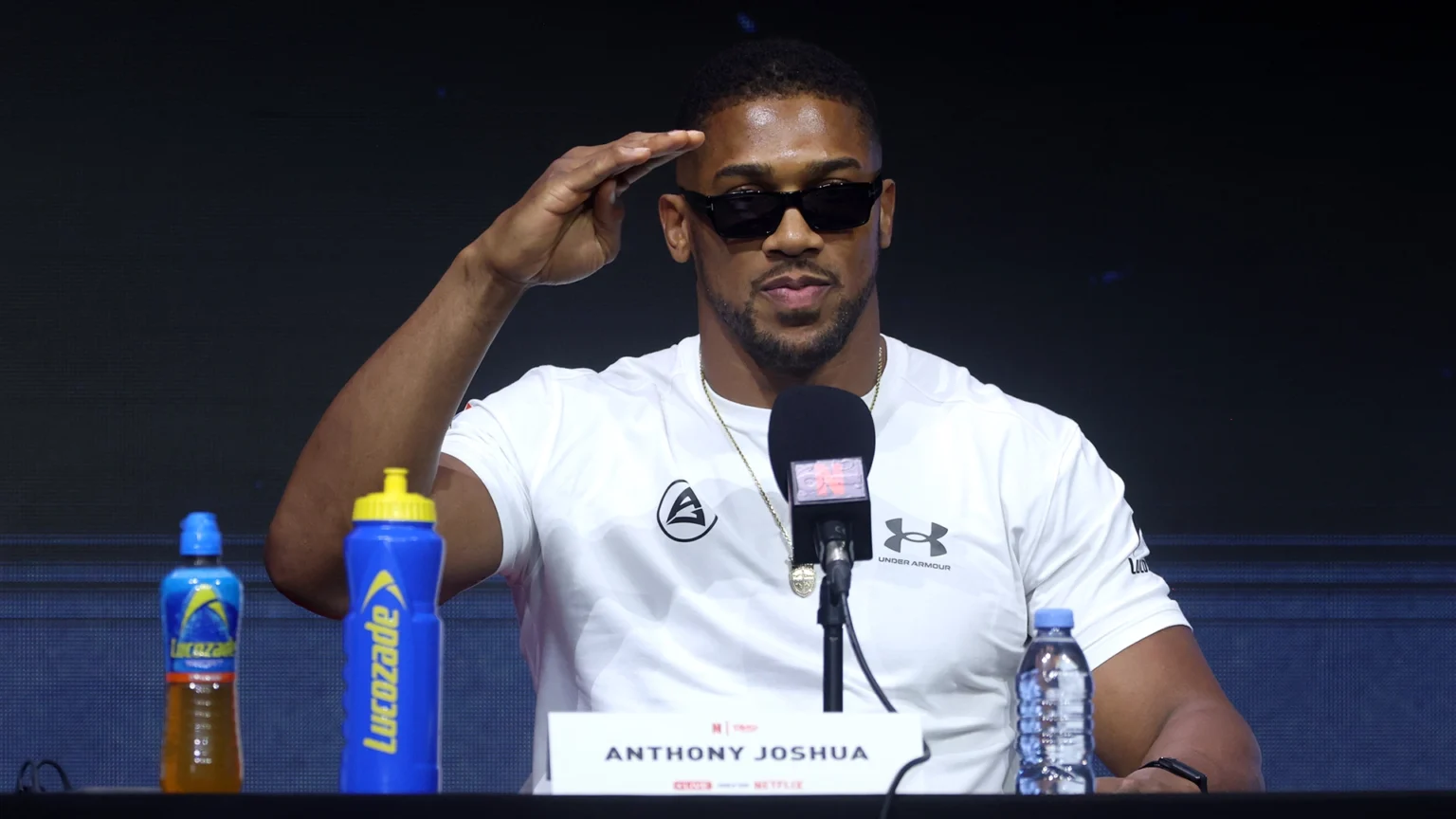
Anthony Joshua pushed for the fight with Tyson Fury to be in the UK. Photo by Richard Pelham
DID JOSHUA REALLY SACRIFICE FOR BRITISH FANS?
Hearn has said that Joshua accepted an eight-figure reduction in compensation, widely reported as approximately £10 million, to keep the fight in Britain.
If that figure is accurate, Joshua did not simply demand a British venue while expecting everyone else to absorb the financial consequences.
He reportedly absorbed them himself.
That matters.
It changes the argument from “Eddie Hearn cost boxing money” to a much more complicated question: Was Hearn protecting the interests of his fighter and the British boxing public, even if doing so meant surrendering significant commercial upside?
There is also a legitimate argument that a fighter should have some say over the environment surrounding one of the defining fights of his career.
The problem is that boxing does not operate like a traditional professional sports league.
There is no single commissioner controlling the entire ecosystem. There is no league office deciding where the championship game must be played. There is no central authority responsible for maximizing the long-term health of the sport as a whole.
Instead, boxing has promoters, managers, sanctioning bodies, broadcasters, streaming companies, venues, commissions, sponsors, investors and fighters, all with different interests.
And that brings the conversation to the real problem.
BOXING HAS ALWAYS BEEN THE WILD WEST
Boxing has survived for more than a century without a single governing business structure.
That freedom has produced some of the sport’s greatest moments.
It has also produced extraordinary fragmentation.
Everyone has a piece.
Promoters protect their fighters. Managers protect their fighters. Networks protect their programming. Streaming companies protect their investments. Sanctioning organizations protect their championships. Venues protect their economics. Investors protect their money.
And sometimes, the people protecting their individual interests are not necessarily protecting boxing itself.
It is the ultimate “too many cooks spoil the soup” problem.
The question is no longer simply whether Cardiff or New York was the better venue.
The question is this – Who is looking out for boxing?
THEN CAME NETFLIX
This is where the Fury-Joshua story becomes much bigger than the venue dispute.
Netflix did not arrive in boxing as an experiment without evidence.
The streaming giant already demonstrated what happens when boxing is placed in front of a massive existing entertainment audience.
Jake Paul vs. Mike Tyson generated an estimated 108 million live average-minute viewers globally, according to Netflix, while the same event peaked at 65 million concurrent streams. Katie Taylor vs. Amanda Serrano on the same card averaged an estimated 74 million live viewers globally and 47 million in the United States.
Those numbers changed the conversation.
Boxing suddenly had evidence that a major streaming platform could take a fight beyond the traditional boxing audience and put it directly into the homes of millions of people who might never have purchased a traditional pay-per-view.
That is an enormous distinction.
Netflix does not have to convince 20 million boxing fans to buy a fight.
It already has an enormous entertainment audience.
And that makes the American market particularly important.
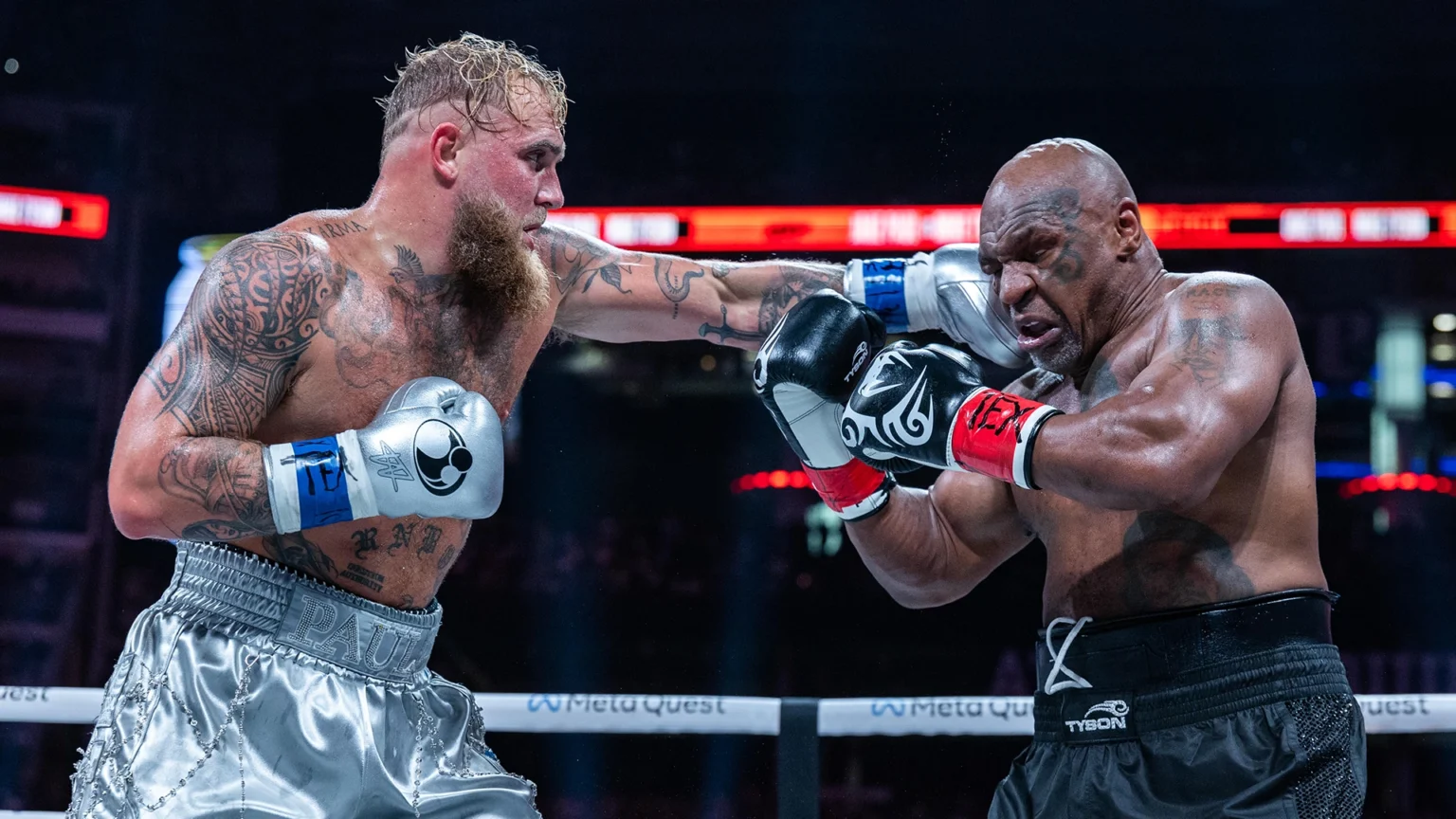
Paul vs Tyson was seen in 60 million households on Netflix. Photo by Esther Lin
AMERICA IS NOT JUST ANOTHER MARKET
Netflix’s last publicly disclosed United States and Canada membership figure was 89.625 million paid memberships at the end of 2024. That same year, Netflix reported $17.36 billion in streaming revenue from the region and an average monthly revenue of $17.20 per paying membership.
Those numbers are important because they illustrate the scale of the commercial ecosystem surrounding Netflix.
Netflix is not simply another television network purchasing boxing rights.
It is an entertainment platform with an enormous established audience.
And there is another important piece to this puzzle.
Multiple sources with direct knowledge of DAZN’s U.S. business have indicated, on condition of anonymity, that DAZN has fewer than 500,000 U.S. subscribers.
That figure is not an official public disclosure from DAZN, and therefore should be treated as confidential-source reporting rather than an independently reported company statistic.
But if the figure is accurate, it highlights an enormous difference in scale.
One platform is trying to build a U.S. audience specifically around sports and boxing.
The other already possesses a massive American entertainment audience and can place boxing in front of that audience without requiring viewers to make a separate boxing-specific purchasing decision.
That is why the argument that “boxing needs Netflix more than Netflix needs boxing” deserves serious consideration.
FURY ALREADY HAD A FOOT INSIDE THE NETFLIX DOOR
There is another fascinating element.
Tyson Fury was not introduced to Netflix with the announcement of Fury vs. Joshua.
His family already had a relationship with the platform through the successful series “At Home with the Furys.”
That does not prove that Netflix became involved in Fury-Joshua because of Fury’s television relationship.
But it does establish something important.
Fury was already familiar territory to Netflix.
Netflix already knew the Fury family. Netflix already understood the entertainment value surrounding Tyson Fury. And Netflix already had experience turning boxing personalities into entertainment properties.
That relationship gave Fury something very few boxers possess: an established connection to one of the world’s largest entertainment platforms.
Hearn has often portrayed Joshua as the “landlord” of the heavyweight division from a commercial perspective.
But Fury has his own kind of leverage.
He has Netflix.
And that may prove increasingly important in the future of boxing.

At Home with the Furys is a series on Netflix that will be in its 3rd season.
BOXING MAY NEED NETFLIX MORE THAN NETFLIX NEEDS BOXING
This is perhaps the most uncomfortable question for the sport.
Netflix has already demonstrated that it can make boxing a major entertainment event.
But Netflix does not need boxing to survive.
Boxing, on the other hand, needs major distribution platforms.
It needs viewers.
It needs revenue.
It needs sponsors.
It needs major fights that casual fans actually care about.
And it needs an economic model capable of surviving when the extraordinary financial backing currently flowing into the sport eventually changes.
That is why the Fury-Joshua deal could represent something much larger than one fight.
It could be a preview of boxing’s next commercial era.
The sport may be moving from an era dominated by traditional pay-per-view and individual promoters toward an era where the largest entertainment platforms become central to boxing’s financial future.
Netflix may not replace promoters.
It may not replace Saudi investment.
It may not replace the matchmaking power of Turki Alalshikh.
But it could become one of the most important commercial engines available to the sport.
THEN CAME TURKI’S SHOCKINGLY CANDID WARNING
And this is where the timing of everything becomes particularly fascinating.
Turki Alalshikh remains deeply involved in Fury vs. Joshua. He helped bring the fight together, has continued to be publicly involved in its promotion and financing, and has been actively working with rival promoters to fulfill his vision for major fights.
But during the London launch of Fury vs. Joshua, Alalshikh made an unusually candid statement about his own future.
He said that his health had not been good during the previous four months and said he did not know whether, in a couple of years, he would remember that particular moment. He also appealed to Eddie Hearn, Frank Warren and Nick Khan to help him complete the wishlist of fights he wants to make.
Those comments should not be turned into medical predictions.
But they do create an unmistakable business question.
What happens to boxing if Turki Alalshikh eventually reduces his involvement?
That question matters because Turki’s influence is about far more than writing checks.
He has been able to put rival promoters in the same room.
He has been able to make fights that previously appeared commercially or politically impossible.
He has helped bring together fighters from competing promotional organizations.
He has been willing to spend enormous amounts of money to create events that traditional boxing economics might not otherwise support.
And that creates both an extraordinary opportunity and a potential structural vulnerability.
WHAT HAPPENS IF THE MONEY CHANGES?
The concern is not necessarily that boxing would collapse without Turki Alalshikh.
Boxing existed long before him and will almost certainly exist long after every current promoter and executive has left the sport.
The concern is what happens to the economic expectations created during his era.
If fighters become accustomed to enormous purses, can traditional boxing revenue continue supporting them?
If promoters become accustomed to Saudi-backed mega-events, can they reproduce those events through conventional pay-per-view?
If rival promoters stop having an outside force capable of bringing them together, do the biggest fights become more difficult to make?
And if the answer to those questions is yes, does boxing have another commercial engine ready to take some of that weight?
That is where Netflix becomes more than a broadcaster.
It potentially becomes part of the sport’s future economic infrastructure.
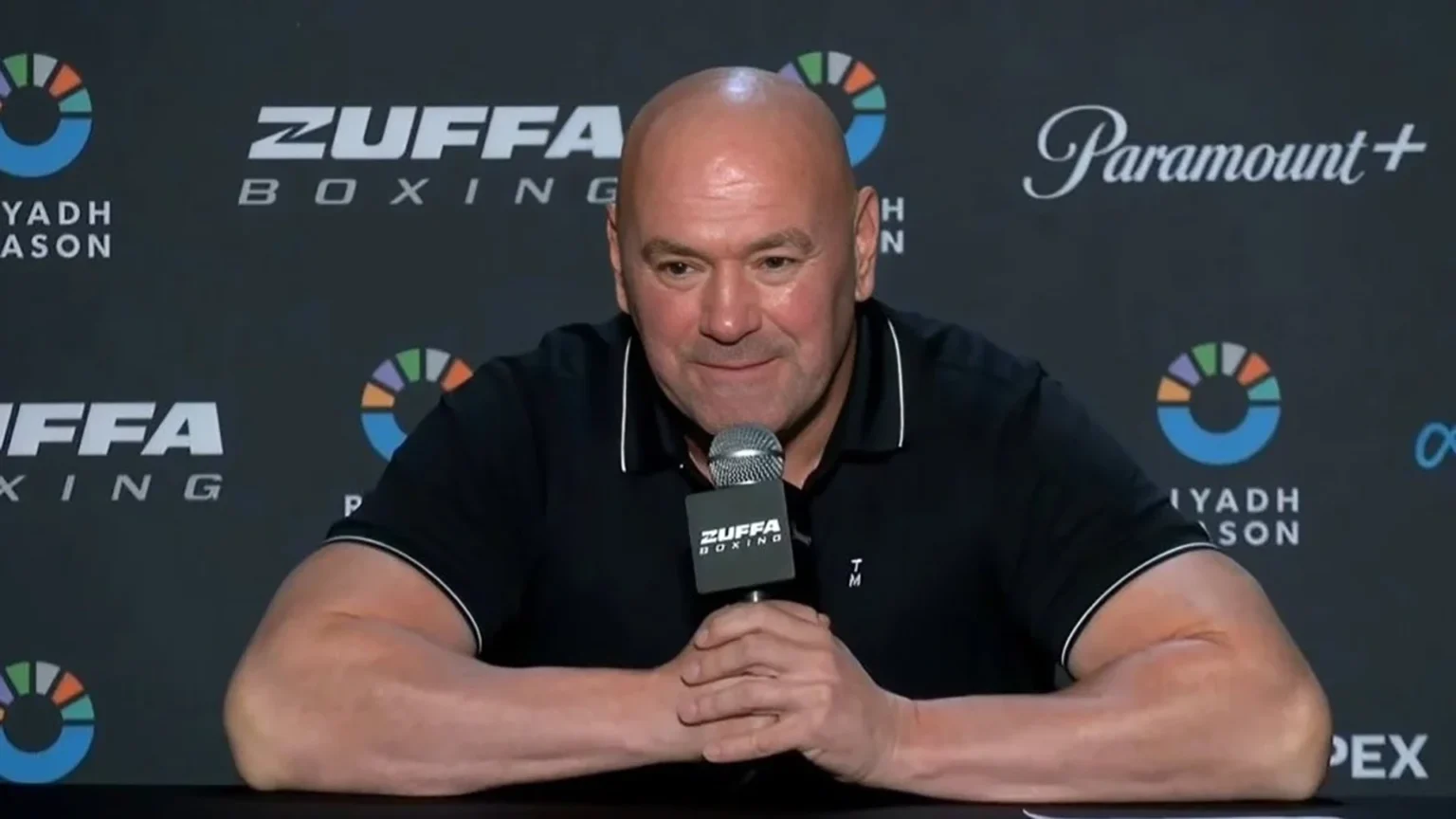
Dana White has claimed that he will be involved in the event.
THE DANA WHITE COMPLICATION
There is another fascinating layer to the Fury-Joshua story.
Dana White and the UFC have become increasingly involved in the event, although the exact distinction between formal promotion and production involvement has been a source of public dispute.
Eddie Hearn has opposed White’s formal involvement, while White has publicly confirmed significant UFC participation, including production responsibilities. Recent reporting also says Zuffa is not listed as an official promoter on the British paperwork, illustrating the difference between formal promotional status and broader event involvement.
That dispute is almost a perfect snapshot of modern boxing.
Netflix.
Turki Alalshikh.
The Ring.
Queensberry.
Matchroom.
Sela.
UFC.
Dana White.
Anthony Joshua.
Tyson Fury.
Everybody has a stake.
Everybody has leverage.
Everybody has a different business interest.
And somehow, in the middle of all of it, the sport itself still has no single entity responsible for asking the simplest question:
What is best for boxing over the next 10 years?
THE FANS CONTROL BOXING
There is another voice that can easily get lost when promoters begin arguing.
The fans.
Fans do not care which promoter wins a negotiation.
They do not care which executive gets the better press release.
They do not care whether Matchroom, Queensberry, Zuffa, Saudi Arabia or Netflix gets the final word.
They want the fights.
They want the best against the best.
They want meaningful championship fights.
They want rivalries settled in the ring.
And they want to feel that the sport they love is being built rather than divided.
That is why Hearn’s decision is so difficult to judge.
If the question is whether British fans deserved to see Fury vs. Joshua in Britain, the emotional argument is obvious.
If the question is whether Joshua had a legitimate contractual and financial reason to insist on Britain, there is a strong case that he did.
If the question is whether New York might have generated substantially more revenue, Turki Alalshikh himself says it would have.
If the question is whether Netflix represents an enormous commercial opportunity for boxing, its previous boxing numbers demonstrate that it does.
And if the question is whether boxing should become too dependent on any single financier, that deserves serious scrutiny as well.
THE BIGGER QUESTION IS NOT CARDIFF VS. NEW YORK
The bigger question is whether boxing can learn something from this entire controversy.
Perhaps the future does not require choosing between British boxing, Saudi investment, American television and Netflix.
Perhaps boxing needs all of them.
The sport needs British fans.
It needs American audiences.
It needs Middle Eastern investment.
It needs traditional promoters.
It needs global streaming platforms.
It needs television.
It needs sponsors.
It needs venues.
And above all, it needs a business structure that allows those interests to work together rather than constantly fight over control.
That is the lesson hidden inside Fury vs. Joshua.
The battle was presented as Cardiff versus New York.
But the real battle may be between the old boxing business model and the new one.

Turki Alalshikh says that he may not be in boxing for much longer.
WHAT DOES BOXING LOOK LIKE AFTER TURKI?
That question may ultimately become more important than Fury vs. Joshua itself.
Turki Alalshikh is still here.
He is still making fights.
He is still investing.
He is still talking about his wishlist.
He is still attempting to bring promoters together.
But his unusually candid comments have forced the boxing world to confront something it may have preferred to ignore.
No individual lasts forever.
No financial era lasts forever.
And no sport should depend permanently on one person’s willingness to spend enormous sums of money.
If Turki eventually steps back, boxing will have to find out whether the infrastructure created during his era can stand on its own.
That could mean lower purses.
It could mean more promoter silos.
It could mean fewer enormous cross-promotional events.
It could mean greater dependence on traditional pay-per-view.
Or it could mean that streaming platforms such as Netflix become increasingly important to the sport’s financial model.
The answer is not yet known.
But the question is now impossible to ignore.
SO, DID EDDIE HEARN MAKE THE RIGHT CALL?
That may be the most fascinating question of all.
Did Eddie Hearn make the right call for boxing’s future by insisting that Fury vs. Joshua remain in Britain?
Was it a patriotic stand that protected British boxing and honored the fans who had waited years to see the country’s two biggest heavyweights finally meet at home?
Or did the decision leave tens of millions of dollars on the table at precisely the moment when boxing should be thinking about how to build a sustainable commercial future beyond the current Saudi-backed era?
There may be truth on both sides.
Hearn’s position had a legitimate contractual foundation. Joshua reportedly accepted a significant financial sacrifice. British fans finally received the fight on British soil.
At the same time, Turki’s $70 million estimate, whether ultimately proven accurate or not, illustrates the enormous commercial opportunity attached to the American market.
And Netflix’s involvement changes the equation again.
The platform has demonstrated that boxing can become a global entertainment event rather than simply another pay-per-view product.
That may be one of the most important developments boxing has seen in decades.
THE REAL TEST HAS NOT EVEN BEGUN
Ultimately, Hearn’s decision cannot truly be judged by the arguments being made today.
It will be judged by what happens afterward.
If Fury vs. Joshua becomes a spectacular global success from Cardiff, generates enormous engagement on Netflix, fills the stadium, satisfies British fans and proves that a massive fight can be commercially successful without maximizing every possible American dollar, Hearn’s position will look very different.
If the event leaves enormous money on the table and demonstrates that boxing cannot afford to ignore the American market, the criticism will become harder to dismiss.
And if Turki eventually reduces his involvement, the importance of Netflix and other global distribution platforms could become even greater.
That is why this fight has become about much more than two heavyweight stars finally meeting in the ring.
It is about who controls boxing.
It is about who pays for boxing.
It is about who distributes boxing.
It is about whether the sport can survive without extraordinary outside financial backing.
And it is about whether boxing can finally stop behaving like a collection of competing kingdoms and begin thinking about the health of the entire sport.
For more than 100 years, boxing has had too many cooks.
Perhaps the time has finally come to ask who is actually responsible for making sure the soup survives.
And when Fury and Joshua finally walk into the ring in Cardiff, one question will remain hanging over the entire event:
Did Eddie Hearn make the right call for boxing’s future?
Joseph Herron is the host of War A Week Boxing, a podcast that is featured on YouTube. He has been involved with boxing for over 30 years.